Thursday, May 22, 2014

No, antibacterial soaps haven't been banned.

 It's triclosan that's been banned, and that's probably a good thing! Triclosan used in soap may actually do more harm than good.


The state of Minnesota recently banned the use of the antibacterial ingredient triclosan.  While the ban doesn't take effect until 2017, the potential side effects and dangers of  using triclosan are quite present and gaining clarity. Click here: for more specific information on the impending Minnesota ban on triclosan

triclosan
 Triclosan has been used in a variety commercial products since the early 1980's. It's overall efficacy and role in the growth of more resistant strains of bacteria has been under scrutiny for more than a decade. The use of triclosan in soap has been proven to promote the build up of  Staphylococcus aureus bacteria in human noses, connected to the growth of breast cancer cells , and has filtered into waterways resulting in the growth of resistant bacteria in rivers and streams.

In addition, the filtration of triclosan into environment has had adverse effects on wildlife populations. The Pacific tree frog is a species that the ubiquitous use of triclosan appears to have seriously impacted.   Surprisingly (to some more than others), the use of triclosan in soap and other commercial products was never really analyzed by the FDA. Only in recent years has the FDA begun to fully question and evaluate its viability. It now appears that triclosan is no more effective than using conventional soap.  Given triclosan's questionable effectiveness, potential health dangers, and environment side effects it would seem that using conventional soap, and hand sanitizers( in moderation) continue to be the best options.

Thursday, May 15, 2014

Yet another food trend?!?!?


Sure...the gluten-free label may sound annoying, 
but is it really just another food fad?

fat cells
Most of us remember the anti-fat maelstrom that began in the early 1990's and is just now subsiding. "Low fat" and "non fat" items were practically touted as panaceas for our dietary woes. The food industry jumped on the chance to profit from research that suggested dietary fat was the primary culprit in a host of health issues. Fast forward and we now have a very different, more nuanced, perspective on dietary fat. 


Which brings us to the upsurge of gluten-free discussions and commercial products. A mere five years ago it was an extreme rarity for me to meet anyone who'd even heard of glutenin/gliadin proteins. Now the term "gluten-free" is so ubiquitous it's become fodder for dialogue in films, television series, internet memes, comedic skits, and misplaced vitriol. So how is this any different from the low fat/non fat trend? For starters, there are statistically significant numbers of the population who suffer from disorders that benefit from gluten elimination diets. 

gliadin protein model


While a limited study may suggest that some individuals with self-reported  glutenin and gliadin sensitivity aren't reacting to gluten, there are many variables and parameters that elucidate the limitations of that study. A small cohort study, especially of a homogeneous population, can't be used to definitively draw conclusions about the effect of gluten on larger heterogeneous populations. At best, it will suggest the undeniable need for future studies. Moreover, the testing methodologies for (non celiac) gluten intolerance are still in their nascent stages. Research has only recent begun to make more solid connections between type I diabetes and celiacs disease.


One of the most unfortunate aspects to the expanded public awareness of gluten is the spread of misinformation. This comes from both sides of the argument. Ultimately, the most pertinent question is whether or not it's a sustainable diet. 

Myths: Gluten-free diets cause nutritional deficits in vitamin D, fiber, B vitamins and magnesium. Supplementation is necessary to fulfill these nutritional requirements. 
Facts: Gluten-free diets include vitamin D sources such as Tuna, mushrooms, Salmon, Sardines, milk (levels vary depending upon the type of milk), and sunlight. Gluten-free diets include excellent fiber sources such as flax seeds, winter squash, almonds, beans, lentils, apples, bananas and berries. Shellfish, fish, red meat, cheese, eggs, dairy, animal organs and crustaceans are excellent non gluten sources of B vitamins. Finally, nuts, dairy, green leafy vegetables, quinoa, potatoes, fish, lentils, avocados, brown rice, dark chocolate and bananas are ready sources of magnesium. 

Preexisting conditions aside, there's no nutritional supplementation(e.g. B 12 shots) required. This is a significant contrast to vegan and certain vegetarian diets. It's ironic that a diet that doesn't actually eliminate necessary nutrients causes negative visceral reactions. Gluten-free "elimination" diets have no correlation to restrictive or deleterious dietary trends(e.g. fruitarian, zero carbohydrates, et cetera). If someone chooses to follow a gluten-free diet, for whatever reason, it's not a threat to those who can ingest gluten; However, it can be of great benefit to significant numbers of people who can't safely ingest gluten. Research will continue to evolve, statistically significant numbers of people will continue to be diagnosed with varying levels of gluten intolerance, and gluten-free options will increase. 


Monday, May 5, 2014


How to become a swinger...of kettlebells


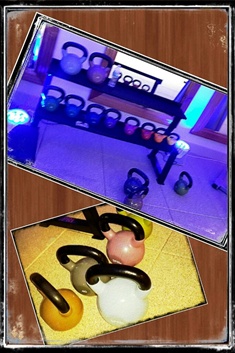
Kettlebells of various weight
Over the past decade kettlebell use has grown exponentially. They vary in size, weight and shape, but their basic function and design has enabled them to become popular exercise tools. With proper training kettlebell users have the capability of safely swinging the bells which significantly augments their effectiveness as resistance equipment.

Two Sides of the Same Coin

Before using a kettlebell it's important to obtain medical clearance and qualified instruction. Improper lifting and swinging techniques can result in injuries and exacerbate preexisting conditions. Hard style and soft style are the two basic swinging styles. There is some debate over which style is more advantageous. Regardless, the styles are closely related. According to Barbados based Marlon Reid, an MMA and WKC certified trainer, soft style and hard style swings are essentially two sides of the same coin. Practitioners of either style will yield significant benefits. One major caveat Reid gives is that clean fluid movements are essential to whichever style of swing we practice.

Reid's kettlebells elucidate how customizable they've become


Foundations

The hard style is similar to Olympic power lifting and plyometrics. It incorporates familiar techniques such as the clean, snatch, press, and squat. There's more energy expended in each movement. Training often consists of short repetition circuits. This style also helps form the foundation for all kettlebell swings. It establishes posterior alignment, movement, and patterns. Reid further stated that the hard style swing is essentially a fundamental pattern for the swing and that it's tantamount to basic techniques taught to a new martial arts student. When a student is trained properly the hard style swing transfers significant power to many other athletic activities. The hard style establishes the basic practices that are required to prevent both acute and repetitive stress injuries to joints, ligaments and tendons.

Complexity

The Soft style swing consists of more intricate and advanced techniques and forms. Compound movements, such as the windmill, are added to the foundation exercises. The Soft style requires and reinforces more fluidity of movement. There's also a greater focus on endurance and training usually consists of extended, time based exercise routines.

Important Tips and Practices

A key element to both styles is the grip. The finger lock is considered to be one of the most efficient ones. The finger lock grip resembles the "Ok" hand sign in which the thumb is clasped firmly over the index finger. Because it requires two fingers to secure the lock this grip is more advantageous to the lifter and decreases the rate of fatigue. Whether training in either or both styles it's important to learn the correct form and execution. With proper preparation both training modalities are beneficial and can be integrated into most overall fitness programs.


References

Kettlebell Science: Scientific Kettlebell Articles
http://www.kettlebellscience.com/scientific-kettlebell-articles.html
Ace Fitness: Kettlebells Kick Butt
http://www.acefitness.org/acefit/expert-insight-article/47/3233/kettlebells-kick-butt/
Ace Fitness: How Do I Get Started Using Kettlebells
http://www.acefitness.org/acefit/healthy-living-article/60/509/how-do-i-get-started-using-kettlebells/
Resources (Further Reading)

World Kettlebell Club: Real Kettlebell Swings
[ http://worldkettlebellclub.com/real-kettlebell-swings/ ]


www.ks-cubed.com
Ks3handbook.asp
Ks-cubed Telefitness